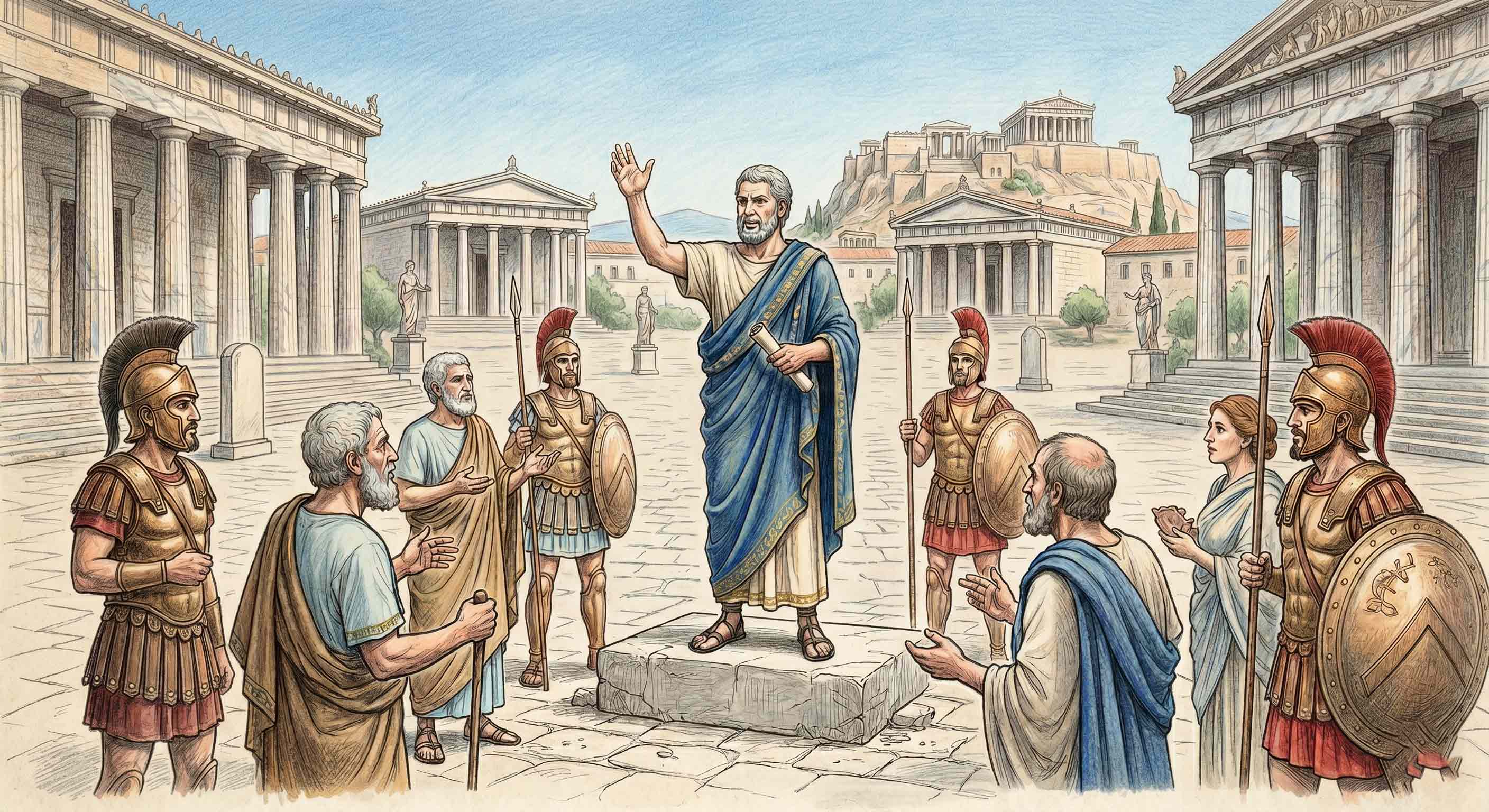
Democracy is the principle that political power and the authority to govern must ultimately reside with the people. It ensures that governments are formed, sustained, and changed based on the consent of the governed, allowing citizens to participate directly or indirectly in the decisions that shape their lives. It promotes liberty, equality, and civic responsibility by creating a system where leaders are held accountable to the public, ensuring that the state serves the collective will rather than the interests of a select few.
Principles of a Democratic Society
Equality
In a democratic society, every citizen is treated with equal political weight regardless of their wealth, social status, race, or gender. This is most visibly expressed in the principle of "one person, one vote," ensuring that no individual's voice holds more formal electoral power than another's.
Liberty
Democracy inherently relies on the protection of fundamental human freedoms. Citizens in a democratic system are guaranteed the liberty to think freely, express their opinions, associate with others, and criticize their government without fear of oppressive censorship or violent retaliation.
Rule of Law
All public and private decisions in a democratic system are governed by an established legal framework that applies equally to everyone, including those in power. This ensures that governance is predictable, fair, and just, preventing leaders from exercising arbitrary or unchecked authority over the population.
Origin of the Word "Democracy"
The word "democracy" originates from the ancient Greek word *dēmokratia*, which is a combination of two root words: *dēmos*, meaning "the people" (or the citizens of a city-state), and *kratos*, meaning "power" or "rule." In its earliest usage in 5th-century BCE Athens, it literally translated to "rule by the people."
Over time, the concept evolved from the direct, participatory system of ancient Greece into the representative frameworks we see today. While early democracy excluded women, enslaved people, and non-landowners, the modern understanding of the word has expanded over the last two centuries to represent a universal system of governance where all adult citizens possess the right to participate in the political process.
Key Thinkers and Pioneers
Cleisthenes
Often referred to as the "father of Athenian democracy," Cleisthenes was an ancient Greek lawgiver who fundamentally reformed the constitution of Athens in 508 BCE. By breaking up the power of the traditional nobility and organizing citizens into new political units based on geography rather than wealth or family ties, he laid the earliest groundwork for a government driven by an assembly of citizens.
John Locke
John Locke was a pioneering Enlightenment philosopher whose ideas about the "social contract" deeply influenced modern democratic thought. He argued that legitimate government can only exist with the consent of the governed and that the state's primary purpose is to protect the natural rights of its citizens—namely life, liberty, and property.
Jean-Jacques Rousseau
The Genevan philosopher Jean-Jacques Rousseau expanded on the social contract theory by introducing the concept of the "general will." He believed that true democracy requires laws to be authored by the people themselves, arguing that political inequality is unnatural and that citizens are only truly free when they participate directly in the creation of the laws they live under.
Abraham Lincoln
While not a traditional philosopher, the 16th President of the United States, Abraham Lincoln, famously encapsulated the modern democratic ideal in his Gettysburg Address. He championed the survival of a government "of the people, by the people, for the people," an enduring phrase that continues to define the spirit of democratic governance worldwide.
Historical Events That Shaped Democracy
The evolution of democracy was neither rapid nor universal; it was forged through centuries of political struggle, intellectual awakening, and social revolution that steadily dismantled absolute monarchies and autocratic rule.
The Magna Carta (1215)
In 13th-century England, a group of rebellious barons forced King John to sign the Magna Carta, a groundbreaking document that established the principle that everyone, including the king, was subject to the law. While not a democratic document in the modern sense, it planted the vital seed for constitutional limits on executive power and the protection of legal rights.
The Enlightenment and Democratic Revolutions (18th Century)
The intellectual movement known as the Age of Enlightenment championed reason, liberty, and the rejection of absolute monarchy. These ideas directly fueled the American Revolution (1776) and the French Revolution (1789). Both events shattered the notion of the "divine right of kings" and established new republics built on constitutions, the separation of powers, and declarations of universal, unalienable rights.
The Suffrage Movements (19th–20th Centuries)
Early modern democracies were heavily flawed, often restricting voting rights to wealthy, white, landowning men. The 19th and 20th centuries saw massive, organized civic struggles—such as the abolitionist movement and the women's suffrage movement—demanding the expansion of the franchise. The gradual securing of voting rights for minorities, women, and the working class transformed exclusive republics into true mass democracies.
The Post-WWII Human Rights Era
Following the devastation of authoritarian fascism in World War II, the global community drafted the Universal Declaration of Human Rights in 1948. This marked a profound shift, intertwining the concept of democracy with the legal protection of human rights, establishing that a true democracy must not only hold elections but must also protect the inherent dignity of all people.
Main Features of Democracy
- Free and Fair Elections: A democratic state ensures that political power is regularly contested through transparent, competitive, and secure elections, allowing the public to vote out leaders who no longer serve their interests.
- Active Citizen Participation: Beyond just voting, democracy requires the active engagement of citizens in public life, including peaceful protesting, running for office, participating in civil society organizations, and engaging in public debate.
- Separation of Powers: To prevent tyranny, democratic systems divide government authority into distinct branches—typically the executive, legislative, and judicial—creating a system of checks and balances where no single entity holds absolute power.
- Freedom of the Press: A thriving democracy relies on an independent and free media to investigate the government, report the truth, and provide citizens with the accurate information they need to make informed political decisions.
- Protection of Minorities: In a liberal democracy, the concept of "majority rule" is strictly balanced with minority rights. The majority cannot use its voting power to strip the fundamental rights, freedoms, or dignity from minority groups.
The Pros of Democracy
Accountability and Transparency
Democracy ensures that politicians and leaders remain answerable to the public. If a government is corrupt, incompetent, or acts against the public interest, citizens have the peaceful mechanism of the ballot box to remove them from power.
Peaceful Transitions of Power
Historically, the transfer of political power frequently involved bloodshed, civil war, or assassination. Democracy provides a stable, structured, and peaceful method for leadership to change hands based entirely on the mathematical outcome of a public vote.
Civic Growth and Innovation
Because democracy fosters freedom of expression and open debate, it creates an environment where new ideas can flourish. Societies that allow citizens to openly criticize the status quo are generally more adaptable, scientifically innovative, and economically dynamic.
Mitigation of Famines and Crises
As noted by economist Amartya Sen, no functioning democracy with a free press has ever suffered a major famine. Because democratic governments must win elections and face public scrutiny, they are heavily incentivized to respond quickly to the needs of their people during crises.
Global Models of Democracy
Democracy is practiced in various forms around the world, adapting to different cultural, historical, and geographical realities.
- Representative democracies involve citizens electing officials to make decisions on their behalf.
- The United Kingdom and India operate under a *Parliamentary* system, where the executive branch (led by a Prime Minister) derives its democratic legitimacy from its ability to command the confidence of the legislature.
- The United States utilizes a *Presidential* system, featuring a strict separation between the executive and legislative branches, with the President elected separately from Congress.
- Switzerland represents a unique model of *Direct Democracy* (or semi-direct democracy), where ordinary citizens have the power to frequently vote on specific laws, constitutional amendments, and public policies through national referendums.
Who Can Be Called a Democratic Citizen?
A democratic citizen is someone who actively participates in the civic life of their community while demonstrating a profound respect for the democratic process. They exercise their right to vote, stay informed on public issues, and advocate for beliefs.
A Crucial Distinction: Being a democratic citizen does not just mean winning elections or forcing one's views onto others. A truly democratic person respects the rights of their political opponents, tolerates differing opinions, and graciously accepts the results of fair elections even when their preferred candidate loses. They understand that compromise, mutual respect, and adherence to the rule of law are far more important than any single political victory.
Summary: A Framework for Liberty
Democracy is the foundational principle that empowers citizens to chart the course of their own society through collective, equal participation. Forged through centuries of struggle against tyranny—from the assembly squares of ancient Athens to the revolutionary battlefields of the Enlightenment and the modern fights for universal suffrage—democracy ensures that a government remains the servant of the people, never their master. By combining majority rule with the strict protection of minority rights, free speech, and the rule of law, democracy serves as the most resilient and humane framework yet devised for managing human affairs, fostering innovation, and securing lasting liberty for all.