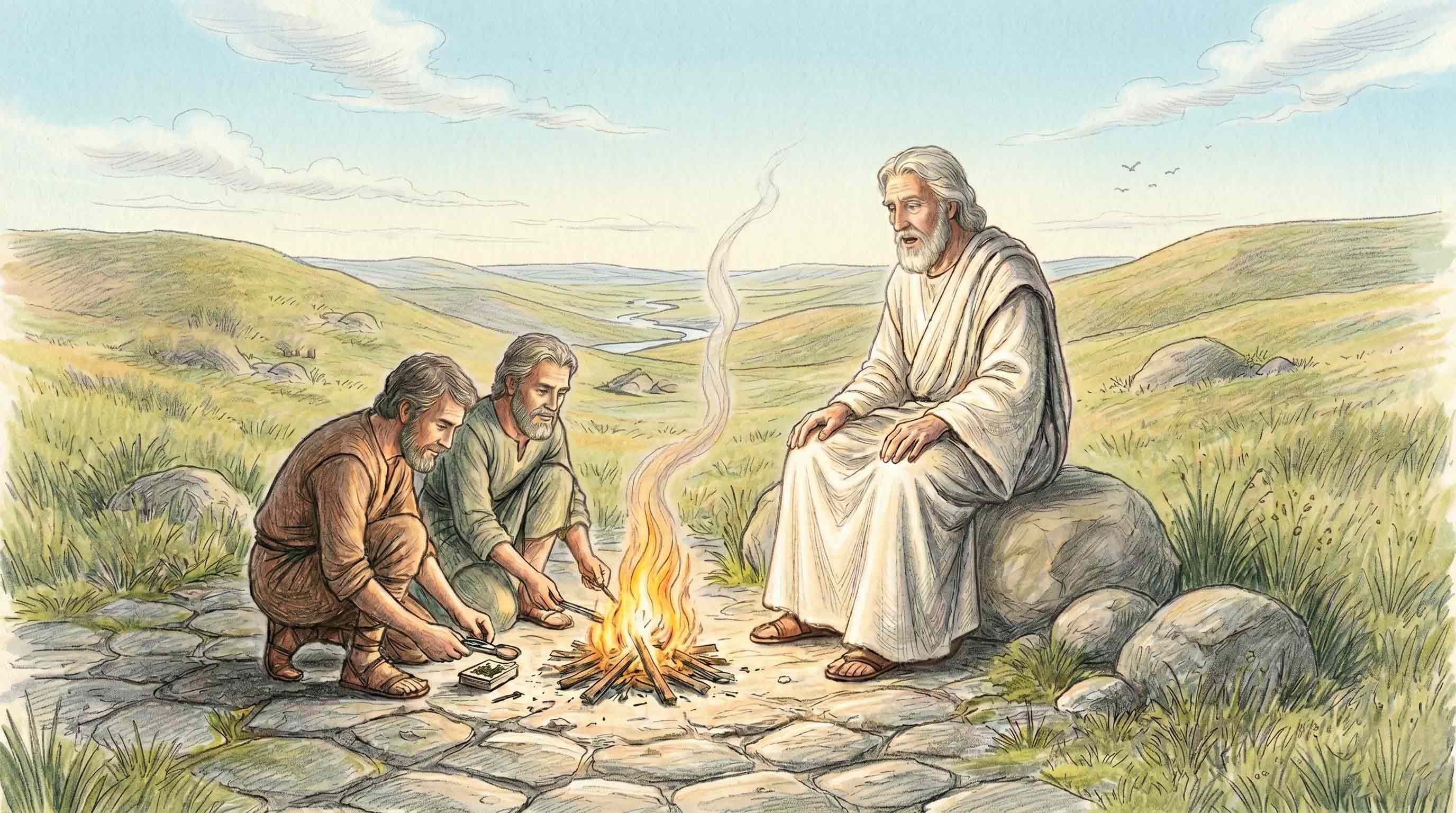
Religion is one of the oldest and most influential ideas in human history, shaping civilizations, cultures, laws, traditions, and personal identities for thousands of years. Across different regions of the world, people developed systems of belief to explain life, death, nature, morality, suffering, and the universe itself. Long before modern science existed, religion provided answers to questions that humans could not explain through observation or experimentation. Religious beliefs also helped communities remain united by creating shared traditions, rituals, ceremonies, and moral expectations that guided social behavior and preserved cultural identity across generations.
The Earliest Human Beliefs
The earliest forms of religion likely appeared during prehistoric times when humans lived in dangerous and unpredictable environments filled with natural disasters, disease, hunger, wild animals, and sudden death. Ancient people did not understand scientific explanations for storms, earthquakes, eclipses, illness, or changing seasons, so they often believed supernatural forces controlled these events. Because nature appeared mysterious and powerful, humans imagined invisible beings, spirits, or gods responsible for everything happening around them. These early beliefs gradually evolved into organized religious systems as societies became more advanced and developed written language, agriculture, and permanent settlements.
Animism and Nature Worship
One of the oldest known religious ideas is animism, which is the belief that nature contains spiritual power or living energy. Ancient communities believed rivers, mountains, forests, animals, trees, and even the wind possessed spirits capable of influencing human life. Since survival depended entirely on nature, people treated the environment with deep respect and often performed rituals to seek protection, successful hunting, fertile crops, or favorable weather. Nature worship became an important part of early human culture because it helped people feel connected to the world around them while providing explanations for events they could not fully understand.
Ancestor Worship and the Afterlife
Another important stage in the development of religion was ancestor worship, where people believed deceased family members continued existing in another spiritual form after death. Archaeological discoveries show that ancient humans buried the dead with tools, food, jewelry, and weapons, suggesting they believed life continued beyond physical death. Ancestor worship strengthened family and tribal identity because people thought ancestors watched over the living and influenced success, health, or protection from danger. Belief in the afterlife later became a major part of many religions around the world and influenced funeral practices, moral teachings, and ideas about the human soul.
Religion in Ancient Mesopotamia
Some of the first organized religions appeared in Mesopotamia, where early civilizations developed complex systems of worship connected to agriculture, kingship, war, fertility, and the natural world. Mesopotamian societies worshipped many gods, with each city often having its own protector deity represented through temples and priests. Religious leaders became powerful figures because they claimed to communicate with divine beings and interpret sacred messages. Religion in Mesopotamia was closely tied to politics and social organization, demonstrating how spiritual beliefs became central to the functioning of early civilizations.
Ancient Egyptian Religion
The civilization of Egypt created one of the most detailed and influential religious traditions in human history. Egyptian religion focused heavily on gods, the soul, judgment after death, and the journey into the afterlife. Egyptians believed rulers known as pharaohs possessed divine authority and acted as intermediaries between humans and gods. Religious ideas influenced architecture, art, medicine, and daily life, leading to the construction of pyramids, temples, and elaborate tombs filled with treasures meant to assist the dead in the next world. These beliefs remained central to Egyptian civilization for thousands of years.
Hinduism and Ancient Indian Traditions
Hinduism is widely regarded as one of the oldest living religions still practiced today, with roots stretching back more than three thousand years. Unlike religions founded by a single individual, Hinduism gradually developed from many ancient traditions, rituals, philosophical ideas, and sacred writings in the Indian subcontinent. Hindu beliefs include concepts such as karma, reincarnation, spiritual liberation, and devotion to different deities representing various aspects of existence. Sacred texts like the Vedas and Upanishads shaped religious life and influenced Indian culture, philosophy, literature, music, and social structure throughout history.
Judaism and the Rise of Monotheism
Judaism introduced one of the most important developments in religious history through the idea of monotheism, which is the belief in one universal God instead of many gods. Earlier civilizations generally practiced polytheism and worshipped multiple deities connected to nature or human activity. Judaism established a strong connection between religion, law, morality, and community identity through sacred teachings and traditions. This religious tradition later influenced the development of Christianity and Islam, making Judaism one of the foundational religions in world history and an important force in shaping moral and spiritual thought.
Christianity and Global Expansion
Christianity emerged from Jewish traditions and spread rapidly across the Roman Empire through teachings associated with Jesus. Christianity emphasized compassion, forgiveness, salvation, and eternal life, attracting millions of followers across different regions and cultures. Over time, churches became powerful institutions involved in education, politics, charity, and social organization. Christian beliefs inspired major developments in art, architecture, philosophy, and literature, while missionaries carried the religion across Europe, Africa, Asia, and the Americas, making Christianity one of the largest religions in the modern world.
Islam and the Islamic Civilization
Several centuries after Christianity, Islam emerged in Arabia through the teachings associated with Muhammad. Islam emphasized belief in one God, regular prayer, charity, discipline, and community unity. Within a relatively short time, Islamic civilization expanded across large regions of Asia, Africa, and Europe, becoming a major center of science, medicine, mathematics, astronomy, philosophy, and architecture. Islamic scholars preserved ancient knowledge while contributing original discoveries that influenced the intellectual development of both Eastern and Western civilizations for many centuries.
The Number of Religions in the World
Today, scholars estimate there are thousands of religions and spiritual traditions across the world, ranging from large global faiths to small indigenous belief systems practiced by isolated communities. Some religions focus on one god, while others believe in multiple gods, spirits, ancestors, or philosophical principles without a creator deity. Despite major differences in rituals and teachings, most religions attempt to answer universal human questions concerning morality, suffering, existence, death, and humanity’s purpose within the universe. Religion therefore reflects both the diversity of human culture and the shared search for meaning throughout history.
Religion and Human Society
Religion has played an enormous role in shaping human civilization by influencing laws, governments, education, art, literature, music, architecture, and moral values. Religious institutions often established schools, hospitals, charities, and social support systems that strengthened communities and preserved knowledge during difficult historical periods. Religious festivals and ceremonies also created strong cultural identities that connected people across generations. At the same time, religion has sometimes contributed to conflict, persecution, and war when different groups competed over beliefs, territory, or political power, showing that religion has both united and divided societies throughout history.
Science and Changing Views of Religion
Modern science has transformed how many people understand the universe by providing natural explanations for events once considered supernatural. Astronomy explains eclipses and planetary motion, biology explains evolution and disease, and physics explains many natural forces that ancient civilizations once attributed to divine intervention. Because scientific discoveries answered many mysteries previously explained through religion, some people now view religion primarily as a historical and cultural system created by human societies over time. Others continue to believe religious teachings contain spiritual truths that science cannot fully explain, making the relationship between science and religion an ongoing topic of discussion.
Conclusion
Religion remains one of humanity’s most powerful and enduring creations because it continues to influence billions of people across every continent and culture. Throughout history, religion has provided meaning, hope, moral guidance, emotional comfort, and a sense of belonging during times of uncertainty and hardship. Whether viewed as divine revelation, cultural tradition, philosophical wisdom, or a human attempt to understand existence, religion has shaped the development of civilization more deeply than almost any other force in history. Its influence can still be seen today in laws, traditions, art, architecture, literature, and the everyday lives of people around the world.